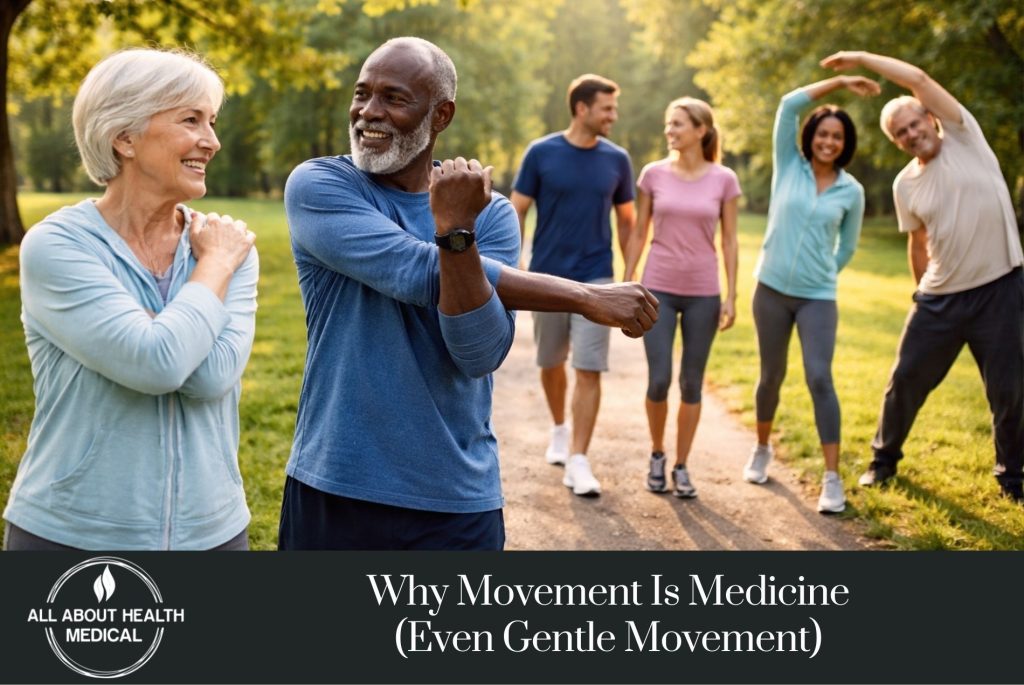
When people think about improving their health, they often imagine intense workouts, strict fitness routines, or hours at the gym. But the truth is far simpler—and far more encouraging. Movement itself is medicine, and even gentle, low-impact movement can have profound benefits for your body and mind.
At All About Health Medical, we believe that movement should be accessible, sustainable, and personalized. Whether you’re recovering from an injury, managing a chronic condition, or simply looking to feel better day to day, incorporating regular movement into your life can be one of the most powerful tools for long-term health.
What Does “Movement Is Medicine” Really Mean?
“Movement is medicine” means that physical activity plays a direct role in preventing, managing, and even reversing many health conditions. Unlike medications that often treat symptoms, movement addresses root causes—such as poor circulation, muscle weakness, joint stiffness, inflammation, and metabolic imbalance.
Importantly, this does not mean you have to run marathons or lift heavy weights. Gentle movement—like walking, stretching, mobility exercises, or light strengthening—can deliver meaningful health benefits when done consistently.
The Health Benefits of Gentle Movement
1. Improves Joint Health and Mobility
Gentle movement helps lubricate joints, reduce stiffness, and maintain range of motion. This is especially important for individuals with arthritis, chronic pain, or age-related joint changes.
2. Reduces Pain and Inflammation
While rest is sometimes necessary, too much inactivity can worsen pain. Controlled movement improves blood flow, supports tissue healing, and can actually reduce chronic pain over time.
3. Supports Heart and Circulatory Health
Even light physical activity helps improve circulation, regulate blood pressure, and reduce the risk of heart disease. Short, frequent bouts of movement throughout the day can be just as impactful as longer sessions.
4. Enhances Balance and Prevents Falls
Gentle strength and balance exercises improve stability and coordination, helping reduce fall risk—particularly in older adults.
5. Boosts Mental Health and Mood
Movement stimulates the release of endorphins, reduces stress hormones, and improves sleep quality. Many patients notice reduced anxiety and improved mood after incorporating regular activity.
6. Helps Manage Chronic Conditions
Gentle movement plays a key role in managing conditions such as:
- Diabetes
- High blood pressure
- Arthritis
- Osteoporosis
- Chronic fatigue
- Back and neck pain
Why Gentle Movement Matters More Than You Think
For many people, the biggest barrier to exercise is the belief that it has to be intense to “count.” This mindset can lead to avoidance, frustration, or injury.
Gentle movement:
- Is safer for beginners and those with medical conditions
- Encourages consistency, which matters more than intensity
- Builds confidence and body awareness
- Can be easily integrated into daily routines
At All About Health Medical, we often remind patients: the best movement is the one you’ll actually do.
How to Start Moving—Safely and Effectively
Here are simple ways to incorporate gentle movement into your day:
- Take short walks after meals
- Stretch in the morning or before bed
- Practice chair exercises or light resistance training
- Do breathing and mobility exercises
- Break up long periods of sitting with movement every 30–60 minutes
Always listen to your body, move within a comfortable range, and progress gradually.
Comprehensive Q&A: Movement as Medicine
Q: Do I need to exercise every day for movement to be effective?
A: Daily movement is ideal, but it doesn’t have to be intense or time-consuming. Even 5–10 minutes of gentle movement spread throughout the day can provide benefits.
Q: What if I have chronic pain or an injury?
A: Gentle, guided movement is often beneficial for chronic pain and recovery. The key is choosing the right type of movement and avoiding activities that worsen symptoms.
Q: Is walking enough to improve my health?
A: Yes. Walking is one of the most effective forms of movement. It supports cardiovascular health, joint mobility, mental health, and overall longevity.
Q: Can movement help with fatigue and low energy?
A: Absolutely. While it may seem counterintuitive, gentle movement improves circulation and energy production, often reducing fatigue over time.
Q: I’m older—can movement still help me?
A: Yes. Movement is beneficial at every age. In fact, gentle exercise is one of the most effective ways to maintain independence, balance, and strength as we age.
Q: How do I know if I’m doing too much?
A: Pain, excessive soreness, or prolonged fatigue are signs to slow down. Movement should leave you feeling better, not worse.
Q: Can movement replace medication?
A: Movement can reduce the need for certain medications in some cases, but it should never replace prescribed treatment without medical guidance. It works best as part of a comprehensive care plan.
Personalized Care Makes the Difference
At All About Health Medical, we understand that every patient’s body, health history, and goals are different. Our team focuses on personalized, whole-body care, helping patients move better, feel better, and live healthier lives—safely and sustainably.
Contact Information
All About Health Medical
2759 Hwy 31 W, Suite #2
White House, TN 37188
📞 Phone: (615) 672-3568
🌐 Website: allabouthealthmedical.com
📅 Schedule An Appointment:
https://allabouthealthmedical.com/appointments